QTTTQQQQQQQQTQTTYTYYYYYYYYYYYYYYYYYYYYYYYYYYYYYYYYYYYYYYYYYYYYYYYU’
Y7667787686786
Educational Portfolio
Mackenzie Dunlap

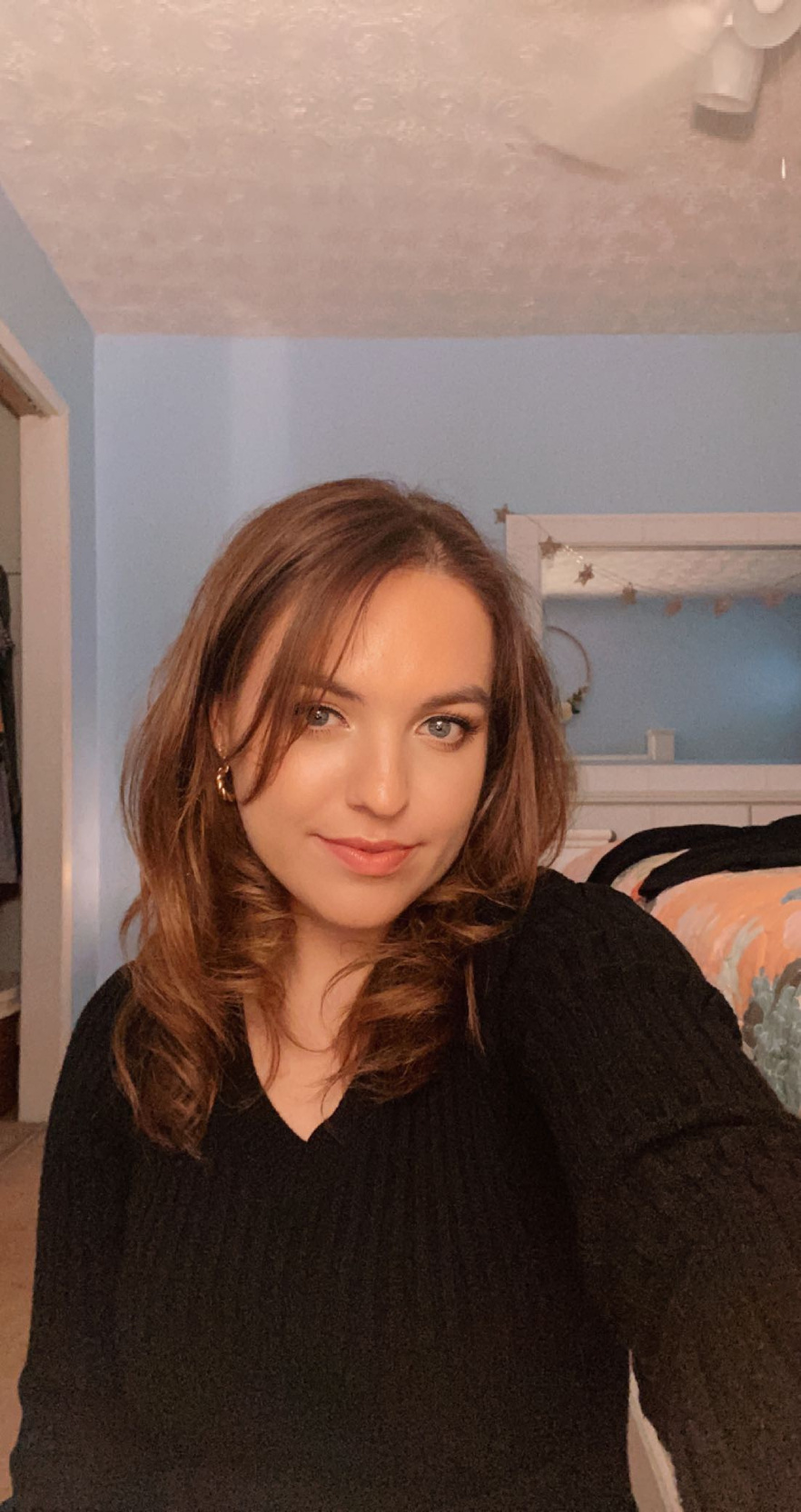
Dearest Reader,
My name is Mackenzie Dunlap. I am a teacher candidate at West Virginia State University. In May of 2024, I will be graduating with a Bachelor of Science degree in Elementary Education.
The contents of my portfolio are designed to demonstrate myself as a HUMAN developer, who displays the necessary knowledge and dedication to education.
Introductory Page

Certification Statement
Degree Diploma Placeholder.

Below are links to my Praxis scores.
Social Studies

Math
Science
Reading

I will graduate in May of 2024 with a Bachelor of Science Degree in Elementary Education. In pursuit of my degree, I have passed all necessary praxis exams to receive my teaching license.
Mission Statement
My goal as an educator, is to construct a welcoming learning environment where creativity and differences are celebrated. All students will be encouraged to express their individuality through their coursework, projects, and daily experiences. In my classroom, we will have a positive outlook towards learning while being respectful to others. Every day we will come to class ready to try our best!
Educational
Philosophy
I believe learning should be explored through hands-on activities and real-life experiences. I believe it is important to understand the role of an educator is to provide the necessary tools for student success while allowing the students the freedom to express their creativity. It is vital for educators to acknowledge that learning cannot be measured by incorrect or correct responses, but by how the student can apply their knowledge to their everyday lives. I will encourage students to view every situation from a different perspective to form out-of-the-box solutions to each problem. This approach to learning develops a stronger scene of problem-solving skills while immersing the students in lessons enriched with differentiated instruction.
Also, I believe each student’s differences and individuality should be respected and celebrated. I strive to create a classroom that fosters a stimulating environment to meet the needs of all students whether it be academically, socially, emotionally, or mentally. In my classroom, students will be encouraged to participate and be active learners through positive interactions between myself and their peers. I aspire to create a learning environment where students understand their mistakes are their biggest success if they choose to preserver through their trials. I want each student to be aware of how knowledge is a powerful tool and how I care for their future success in every aspect of their lives.
One of my main focuses as an educator is to encompass Howard Gardner’s Multiple Intelligence theory while incorporating John Dewey’s proppant of real-world application into my classroom. Howard Gardner’s Multiple Intelligence theory determined nine types of learning styles that describe how each individual learns most effectively. By incorporating this educational theorist into my lessons, I will be able to construct a learning environment built on the foundation of differentiated instruction to meet the needs of all my students. Also, I will be able to incorporate John Dewey’s educational theories into my instruction by connecting my student’s previous knowledge to a new skill and making my lessons applicable to the real world.
How does this connect to HUMAN Developer?
H- Holistic Approaches to Student Learning
The most important aspect of my educational philosophy is ensuring that I meet the needs of all my students. To achieve this, I plan to view all students with a holistic approach by taking into consideration the student’s mental, physical, and emotional well-being and how these aspects impact the individual’s ability to learn. I will achieve this goal by creating a positive classroom environment, nurturing, and comfortable for all students to grow.
U- Understanding Diversity
My classroom will be an environment where diversity is celebrated. To create a positive learning environment that welcomes all students, I will take into consideration my students’ home lives, genders, religions, races, cultures, and socioeconomic status. I understand my purpose as an educator is to meet the needs of all my students. By utilizing Howard Gardner’s Multiple Intelligence theory in my instruction, I am able to adapt my lesson to reach the learning needs of all my students. I will also take into consideration the mental, emotional, and physical needs of every individual.
M- Manging Learning Communities
Classroom management is crucial to the academic success of all students. Therefore, I choose to create a classroom management strategy that intends to correct unwanted behavior in a nurturing environment. However, I am aware my chosen classroom management strategy will always be changed based on the needs and behaviors of each class. To minimize classroom disruptions I will plan challenging lessons to keep the students interested and engaged throughout the learning process.
A- Assessing Student Learning Based on National and State Standards
In my classroom, I am aware my students will be on all levels of learning. To provide the necessary support each student will need, I plan to access their prior knowledge and scaffold my instruction. I will reteach the skills my students are struggling with while finding creative ways to incorporate grade-level standards into each lesson. I plan to take all necessary measures to help my students grow and learn.
N- Newer approaches to Student Learning Through Technology and other Innovation Practices
As a teacher, it is my responsibility to ensure my students have the necessary tools to be successful and productive members of society. Incorporating technology into classroom instruction encompasses the tools used to enhance students learning. Therefore, I strive to select purposeful programs and resources to differentiate instruction and strengthen the students’ skills.
You cannot put a flower in a box, shut it, and expect it to grow without sunlight and water. A flower grows when it is nurtured by sunlight and sprinkled with water. As educators, it is our responsibility to create an environment adequate for students to grow. Therefore, you cannot expect a student to grow when you design a restrictive learning environment, but rather you should design a classroom to be more free thinking leaning towards the student's creativity.
I always say, "put me in a box and I will fail you, but allow me the space and means to grow and I will impress you."
-Mackenzie Dunalp
Documents
Resume

Transcripts
Praxis Scores
Social Studies
Math
Science
Reading
Certificates
- I have been on the Dean's list for five semesters, from freshman year, fall of 2020, until the present (Fall of 2023).
- I was inducted into Kappa Delta Pi in the spring of 2022.
- I have served as an officer in Kappa Delta Pi from the Fall of 2022 to the Present Fall of 2023.
- I have been a member of the Reading Association since the Fall of 2022.
- I have been PLTW Launch certified since the Summer of 2023.
1A.
Demonstrating Knowledge of Content and Pedagogy
Based on my Praxis scores, unofficial transcripts, and unit lesson plan it is evident I have an extensive understanding of the important concepts in my content area. Using my prior knowledge, I have constructed a lesson plan catering to the understanding of prerequisite relationships among topics and concepts. For instance, when creating my unit plan on subtraction and regrouping, I realized students must be aware of place value before the students can accurately subtract. I anticipated student misconceptions by embedding opportunities for students to share their prior knowledge about subtraction and regrouping at the beginning of the lesson through a collaborative board. To counteract student misconceptions, I quickly reviewed place value before introducing subtraction to the class. Linked below is a copy of the Nearpod used to enhance student learning and the lesson plan. In the "anticipated content difficulties" section of my lesson plan, I noted possible student misconceptions that may occur throughout this lesson. My ability to determine student misconceptions and pre-requisite skills demonstrates my understanding of how important concepts in the discipline relate to each other like walking up stairs.
My lesson plan reflects a familiarity with a wide range of effective pedagogical approaches by offering the students a variety of methods to display their level of content knowledge. The differentiated instruction in my lesson plan includes videos, teacher and student use of technology, hands-on activities, exit tickets, and graphic organizers. The differentiated instruction used throughout my unit plan demonstrates the cognitive structures of my students' mental patterns by catering to the learning styles of each student.
Below are the links to my praxis scores.
Reading

Social Studies
Math
Science
Transcripts
Unit Plan Day 1
Nearpod
Unit Plan Day 2
Construction Builders

Unit Plan Day 3
Scavenger Hunt
1b.
Demonstrating Knowledge of Students
I am aware of how important it is for a teacher to design lessons that are engaging while connecting the student's knowledge to real-world experiences or problems. I am also aware that students are more likely to be active learners when their interests and developmental levels are taken into consideration while creating lessons. I understand the importance of obtaining information regarding the student to make decisions that impact the student academically, behaviorally, or emotionally.
Therefore, throughout my experience, I have purposefully acquired knowledge about my students to understand their skills, interests, learning styles, and needs through several sources. One of these sources includes an “Interest inventory” linked below, which I have used to learn more about my students. After researching and considering the reading interests of my students, I developed a lesson plan to teach students inferencing and drawing conclusions through the incorporation of Harry Potter. Linked below are videos, lesson plans, and other supplemental resources I created for this activity.
While creating this Harry Potter-themed lesson, I also took into consideration varied approaches to learning and the specific needs of each student. I achieved this by documenting the accommodations I made in the differentiated instruction sections of my lesson plan and graphing the results of the student’s work. Also, noted in the lesson rationale and overview section of my lesson plan, states why inferencing and drawing conclusions is a real-life skill and is important for students to learn.
Intrest Inventory
Harry Potter Theme Lesson Activities

1C.
Setting Instructional Outcomes
During my instruction, I ensure to set clear, high-level learning outcomes, written in developmentally appropriate language for my students. When using the West Virginia College and Career Readiness Standards, I can assess these instructional outcomes for specific standards.
The instructional outcomes included in this Nearpod lesson are listed in the "I will be able to" statements to provide students with clear and direct expectations for what they will be learning in this lesson. The objectives demonstrate multiple types of learning by teaching the students how to identify common shapes and attributes, draw shapes based on their attributes, and recognize shapes in the real world for both 2-dimensional and 3-dimensional shapes. For instance, in this lesson, the students were required to create different shapes using Play-Doh and toothpicks to reflect several different types of learning to represent both coordination and integration. The instructional outcomes in this lesson permit high-level learning in the discipline by requiring students to read “hints” about the attributes of a shape and use these hints to predict the name of the shape. The students also achieved Bloom’s Taxonomy level six, by creating the shapes with toothpicks and Play-Doh.
I strive to plan my lessons by creating coherent instruction with coordinating standards and topics. I also strive to differentiate instruction outcomes, when necessary, for students who are required to receive appropriate modifications. For these students, I met their needs by scaffolding and differentiating instructional outcomes through an interactive KWL chart at the beginning of the Nearpod lesson to determine how many shapes the students already knew. I also noted text-to-speech accommodations in the differentiated instruction section of my lesson plan. I embedded reasonable predictions about anticipated content difficulties in my lesson plan and designed my instruction to counteract these outcomes.
I Will Statements

WVCCR Standards

2D and 3D Shapes Lesson Plan

1D.
Demonstrating Knowledge of Resources
As shown by the artifacts below, I am knowledgeable of the available resources to use in my classroom. While being a student at West Virginia State University, I have created a resource log of websites to use in my future classroom. These resource logs include websites that offer online games, worksheets, and activities for social studies for students to grow their knowledge. I also use these resource logs to extend my professional skills.
My cooperating teacher and I, also use interactive games as a learning tool for our students to memorize their multiplication tables. This app is called the “speed drill” app and is available on the app store. The game shows students the multiplication table and then provides the students with options for the answer. Once the students have selected their responses, the app will notify the students if their answers are correct or incorrect. This resource can be located and used throughout the district, school, community, universities, professional organizations, as well as the internet.
In addition to technological resources, I strive to use resources in the community to strengthen my instruction in the classroom. For example, while being a member of Kappa Delta Pi, I was provided an opportunity to participate in a Veterans Day Community Service Project, where I met veterans. During this time, I was able to hear their stories and learn from their experiences. In my future classroom, I could reach out to a veteran and ask him or her to speak to the students about their real-life stories to connect what we are learning about in social studies to their experiences.
Resource Log

Speed Drill App
Veteran’s Day Community Service

1e.
Designing Coherent Instruction
While planning lessons, I strive to create a sequence of learning activities that follow a coherent sequence. The two lessons linked below incorporate engaging, high-level cognitive activities for all students. All lessons are aligned with instructional goals based on the West Virginia College and Career Readiness Standards.
For instance, I taught a mini-lesson on inferencing and making conclusions using the “case of the messy classroom.” The students were required to make inferences about clues in the classroom to develop a conclusion about who was the guilty culprit. The next week, I taught a mini-lesson on text evidence using Lego blocks. The students demonstrated text evidence using color-coded blocks. At the end of the lesson, I asked the students to compare and contrast text evidence to inferencing and making conclusions.
Throughout these lessons, I ensured the content was delivered using a variety of methods. I provided my students the opportunity to work with their peers based on varied instruction groups. My cooperating teacher and I, have purposefully created a seating chart to distribute the students based on their academic performance to make group work effective for every student. During both of these lessons, the students were given the choice to work with a peer at their table. I also used visual aids, videos, and human-read text-to-speech throughout my whole group instruction. During independent work, the students were given the choice of what questions to complete to be graded.
Text Evidence Lesson
Inferencing
Lesson
1F.
Designing Student Assessment
Throughout my placement at Holz Elementary School, I have created multiple student assessments for my unit plan. I designed these plans with specific instructional outcomes in mind. I used paper-pencil assessments while including opportunities for students to use manipulatives to demonstrate their understanding of regrouping with subtraction. By requiring my students to take a pre and post-test, the assessment methodologies used throughout my unit plan provided me the opportunity to adapt my instruction to meet the individual needs of my students. For instnace, I included text-to-speech accomodations for students with IEPs and 504 plans and used formative assessments such as worksheets and whiteboards to guide my instruction. These accomodations and assessments can be noted in my lesson plan linked below.
I also created a subtraction checklist for students as a guide for students to assess their work to contribute to a class question and answer session at the end of each lesson. I designed this checklist to demonstrate the steps necessary for students to accurately complete subtraction problems based on the instructional outcomes of the lesson. The intention of the subtraction checklist was to set clear criteria for assessing the student's work.
During my placement at Mary C. Snow West Side Elementary, I created a Harry Potter themed lesson. The students contributed to the development of the lesson plan and assessment because it was based on the the student’s instrest inventory.
Subtraction Check
List

Hands-on Learning

Intrest Inventory
Harry Potter Theme Lesson Activities
Pre/Post Test
Test Results
2A.
Creating an Environment of Respect and Rapport
My cooperating teacher and I, strive to create a classroom environment where teacher and student relationships are respectful, reflecting genuine warmth, caring, and sensitivity to the students as individuals. Throughout my field experience at Holz Elementary School, I have taken the initiative to write my students post-it notes praising positive behaviors or actions. Our classroom now refers to them as, "Post-It Praise." I write the students a note and leave it on their desks for them to read. We provide our students with intentional praise to make our classroom environment a more enjoyable space for all.
To make ensure our classroom environment is a comfortable space for all students, we encourage the students to make yearly goals. At the beginning of the semester, I assisted my cooperating teacher with a "Not Yet" goal-setting lesson. The students were required to think of a skill or subject they struggled with. The students had to write their skill or topic using a "Not Yet" sentence. For instance, one student said, "I am not good at social skills... yet." Another student wrote, "I am not good at multiplication... yet." Throughout the year, when the students are struggling to take intellectual or social risks, we reference our "Not Yet" poster in the classroom to display how we are all growing, evolving, and changing every day. We encourage students to understand how we strive to reach our goals together, although some days we might struggle. We want our students to understand, “We can do hard things!”
My students are aware of the necessary respect for their classmates but also contribute to high levels of civility among all members of the class. As demonstrated by my field experience evaluations during my Education 316 class, I remained respectful and displayed good human relations skills with my students. I have also linked below a video of the social interactions in my class between students and teachers to demonstrate respect in the classroom.
Classroom Interaction Video

Evaluation
“Post- It Praise”

“Not Yet” Lesson
2B.
Establishing a Culture for Learning
In my current placement, we are a cognitively busy place. Students and teachers will share a belief that learning is important. My cooperating teacher and I, convey high expectations for our students to promote hard work and problem-solving skills. We achieve this by providing students with the necessary resources and tools to be successful.
In our classroom at Holz Elementary, we display student artwork and written assignments to align the course material to the learning styles of all students. For instance, I assisted my cooperating teacher with a sun and moon writing activity. We used warm and cool colors to reflect the tone of the writing. The warm colors represent emotions such as anger, love, and passion. In contrast, the cool colors represent emotions such as happiness or sadness. While displaying student work in our classroom, we encourage students to take pride in their work by being actively engaged in every lesson.
We also display visual aids in our classroom to enhance the learning process, guiding students to explore their abilities more independently. Our math wall displays a step-by-step key for problem-solving and a list of vocabulary words with definitions of each word. The students can reference the displays during class to promote independent thinking skills. In our classroom, we also use vocabulary games for the students to assist peers in their precise use of language.
My cooperating teacher and I, encourage high expectations by displaying our weekly focus goals for each subject. By showing the students what they will be learning each week, they understand what skills they are required to work hard to learn.
Vocabulary Game
Video

Week In Focus

Sun and Moon Drawing
Math Wall


2C.
Managing Classroom Procedure
My cooperating teacher and I, use effective procedures and routines to maximize instructional time. Our routines are well-defined, understood, and followed by all students. One procedure we use in the classroom is our classroom doorbell. We use this tool as an attention grabber when the students are becoming too loud or when we need to make quick transitions. Linked below is a video of myself using the classroom doorbell to grab the attention of the class. In the video, the students take initiative during transitions, because they hear the doorbell, stop, then listen for further instructions. We also use hand signals during math instruction called "number talks." While using number talks, we use non-verbal hand signals to communicate with our students, instead of verbal communication to maximize instructional time. Linked below is a picture of the non-verbal hand signals we use during instructional time. We also utilize morning slides to communicate with the students their daily expectations and activities to complete for morning work. Linked below is a picture of the information displayed on our daily slides.
In our classroom, the students take the initiation of the management of groups, by requiring our classroom helper to move the velcro dots of our guided groups rotation schedule. Our students are also held responsible for organizing their table supplies in their group caddies. At the end of each day, the students are required to clean or rearrange their supplies using the visuals on the wall.
At Holz Elementary School, my cooperating teacher and I interact with and encourage parent volunteers and paraprofessionals to make individual contributions to our class. Our parent volunteers help with popcorn days or other school activities. We also encourage people in the community to come and read to our class on Fridays. Linked below are pictures of the activities or supplies our parent volunteers have participated in or contributed to.
Hand-Signals

Doorbell Video

Morning Slides

Student InattentiveTasks

Slideshow of Volunteer/ Paraprofessional Activities and Contributions
2D.
Managing Student Behavior
To ensure student behavior is entirely appropriate, my cooperating teacher and I use a teaching strategy called Whole Brain Teaching. By using this teaching strategy, students are encouraged to take an active role in monitoring their behavior and/or that of other students against standards of conduct by setting goals and following classroom rules.
My cooperating teacher and I use a whole group behavior management strategy called, "Beat the Teacher." This strategy encourages positive behavior with a reward system. In our classroom, we have three charts designated to track student behavior. The first chart tracks the class' daily behavior. If the students are well-behaved during specials, transitions, or other tasks they recieve a chip on this chart. The second chart tracks the negative behavior of the students because the teacher earns a chip if the students are not on their best behavior. The goal is for the students to have more points than the teacher at the end of the day. If the students have more points than the teacher, the class receives an "X" on the five-by-five table. Once the table is complete, the class receives a reward for their good work.
This allows teacher monitoring to be subtle and preventative. The response to student misbehavior is sensitive to individual student's needs and respects students' dignity because we refrain from singling out negative behaviors and encourage positive behaviors.
Below is a link to a video of me giving my students a chip for their positive behavior. I decided the students deserved a chip because they were working hard, staying in their seats, and were engaged in the lesson.
Class Behavior Chart

Behavior Video

Daily Chip
Tracker
2E.
Organizing Physical Space
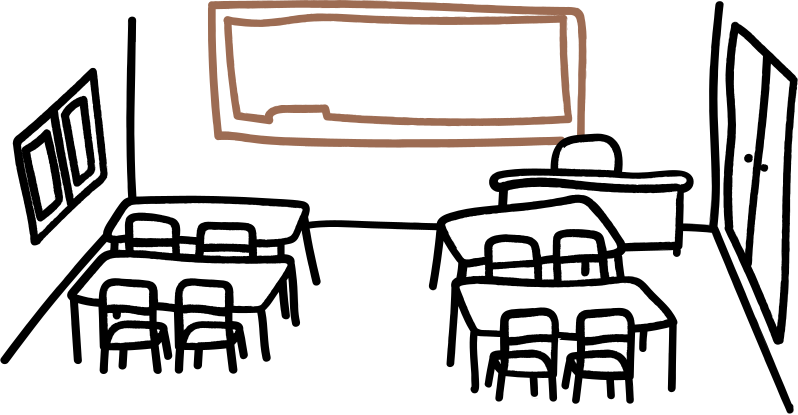
My cooperating teacher and I ensure the classroom environment is a safe space and that learning is accessible to all students, including those with special needs. For instance, we allow students with hyperactive tendencies to trade their chairs in for wobble stools. We also provide preferential seating at the front of the room for students who need extra support.
We effectively use physical resources and materials that are appropriate for the learning activities. We achieve this by using student book boxes instead of desks and student supply caddies for each group. We also have a designated section in the classroom for students to charge their iPads during the day.
The students contribute to the use or adaption of the physical environment through flexible seating options. We allow the students to use stools, bean bag chairs, beach chairs, and the carpet during reading and math groups. All of these components of the physical environment are used to advance student learning through student choice and efficient routines.
Slideshow of Classroom
Organization and
Flexibility Options
3A.
Communicating With Students
I believe students are more likely to learn when they understand the purpose of every lesson. To communicate and link the instruction purpose of the lesson to the larger curriculum, my cooperating teacher and I, display the weekly learning targets on a bulletin board labeled, "Week in Focus." We also have another bulletin board in our classroom that is used to display the weekly objectives. Linked below are pictures of the bulletin boards we continuously reference throughout the week.
During my unit plan, I reviewed and discussed the objectives before I taught the students a new skill. Linked below is the PowerPoint I used to guide my instruction and display the objectives. I also have included a teacher-made worksheet to display my ability to provide students with clear procedures and directions based on anticipated student misunderstandings using expressive language.
On the second day of my unit plan, I provided students the opportunity to contribute and extend the content by explaining concepts to their classmates and other mathematical sound strategies using the think-pair-share method. As seen in the video below, the students had to turn to their partners and answer the question, "How are addition and subtraction alike? How are they different?" The partners then shared their responses with the class. After discussing the class' responses, the students were asked to answer, "How are the break-apart and standard algorithms alike? How are they different?" The class followed the same procedure as before to share their responses with the class.
At the beginning of my field experience at Holz Elementary School, I taught my third-grade class a lesson on Inferencing and Drawing Conclusions. In this lesson, I included pictures of soccer players to engage the students because sports are a topic of interest for them. The students were required to draw inferences and make conclusions about the soccer player on the field. Linked below is the PowerPoint I used in this lesson to display the pictures to the class. I have also included the lesson plan which demonstrates my ability to provide clear explanations of the content listed in the lesson procedures. This lesson plan also showcases how I can develop conceptual understanding through clear scaffolding by being aware of student accommodations listed in the differentiated instruction section of the lesson plan.
Linked below is a video of a vocabulary game I facilitated with the class. During this time, you can see how my spoken language is expressive. By using a vocabulary game, I was able to encourage the students to extend their vocabularies within the discipline and for general use giving them real-life examples of the word. The students were contributing to the correct use of academic vocabulary because I read the word to the students, and the teams had to search and smack the correct word using their fly swatters.
Inferencing and Drawing Conclusions

Week In Focus

Vocabulary Game Video
Think-Pair-Share

Unit Plan Day 3- Objectives and Worksheet
3B.
Using Questioning and Discussion Techniques
As a teacher, I understand the importance of using a variety or series of questions to cognitively challenge students. High-quality discussion and questioning skills encourage students to explore new concepts and promote engagement. I strive to provide students the opportunity to advance their high-level thinking skills and discourse to promote metacognition. When using high-order questions, I am aware students will formulate many questions and initiate topics that challenge one another's thinking. For instance, in the exit tickets linked blow, I required the students to create their own word-problems using subtraction within four-digit numbers.
The video linked below demonstrates my ability to use questioning and discussion techniques throughout my instruction. During my subtraction unit lesson, I asked students, "How are subtraction and addition related? What is this called?" The students were required to answer the question using the think-pair-share strategy. The students were then given the opportunity to share their responses with their partners and then their class. During this part of the lesson, the students made unsolicited contributions while I ensured that all voices were heard in the discussion.
Also, linked below is a PowerPoint I used to guide student questions and class discussion. For instance, I asked students to analyze (Bloom's Taxonomy level four) different ways to subtract three-digit numbers by comparing and contrasting each strategy.
PowerPoint With Discussion Questions

Think-Pair-Share
Video
Lesson Plan Day 2- Construction Builders

Exit Tickets
3c.
Engaging Students In learning
During the second day of my unit plan, I required my students to complete a building and borrowing subtraction activity with base ten blocks. As seen in the video linked below, the students are engaged in high-level tasks requiring complex thinking because they are creating structures (Bloom's Taxonomy level six). In this portion of the lesson, the students are initiating contributions to the exploration of important topics by problem-solving each subtraction task card. The students serve as a resource for others because they are exploring subtraction by regrouping with their peers.
During the first day of my unit plan, the students were self-paced by a timing tool integrated into the Nearpod slides. The structure and pacing of the lesson are clearly followed and can be noted in the lesson procedure section of my lesson plan linked below. The students are provided the time needed to intellectually engage and reflect on their learning based on the questions and activities in the Nearpod.
My cooperating teacher and I provide suitable scaffolding in our instruction through our guided math and reading groups. During our groups, the students are grouped based on their reading benchmark scores. The students complete the multiplication station and grammar task cards during small group time. The students complete worksheets and activities based on the level the students are at. Once the students have completed one task and taken their test on the section, they are permitted to move on to the next skill at their own pace. The students are held accountable for completing each assignment and asking for help if they are struggling.
Nearpod Lesson
Plan
Student Engagement Video
Independent Activites

3D.
Using Assessment In Instruction
As a teacher, I understand how important it is to fully integrate instruction through extensive use of formative assessments. On the third day of my unit plan, I incorporated students in the assessment criteria by allowing the students to include their interests in their exit ticks. Linked below are examples of the student’s word problems they created for four-digit subtraction.
Also, throughout this unit plan, I regularly used questions and assessments by individual students to diagnose evidence of learning by students or to correct misconceptions. For example, while teaching my class how to subtract four-digit numbers with regrouping, I displayed a subtraction problem on the board and required students to solve it on their whiteboards. When the studentts had completed the question, the students raised their whiteboards to show me their answers. In the video linked below, you can see me correct the student’s problems during class.
During this lesson, I also used a variety of forms of feedback by permitting students to come to the board and explain their thought processes to the class. During each step, I asked them to explain their answers. In the second video linked below, you will see a student coming to the board to demonstrate a subtraction problem. While completing the problem, the student answered the question incorrectly. I was able to use the student’s mistake as a learning opportunity. I asked the class to self-assess their work and monitor their progress by using inverse operations to check their answer. As a class, we corrected the student's answers to demonstrate our progress.
Throughout my unit plan, I differentiated instruction to address individual needs and student misunderstanding by uploading the all-supplemental resources on Schoology. Linked below are screenshots from Schoology to demonstrate how I successfully met the individual needs of my students by following the criteria of their IEPs.
Scavenger Hunt Lesson Plan
White Board Video

Student Explanation Video

Exit Ticket
Accommodations

3E.
Demonstrating Flexibility and Responsiveness
When teaching, an educator will face numerous challenges and tasks. Teachers must also predict how a lesson will go and how to respond to certain situations. Part of being an effective teacher is responding to spontaneous events with flexibility. Also, another important task as a teacher is to successfully differentiate and adjust instruction to meet the needs of your students.
For instance, in the Fall of 2022, I taught a lesson on positional words to a kindergarten class. In my lesson plan, I made a special note of how I planned to accommodate the student's IEP throughout my lesson. Linked below are images of the student work from this activity to demonstrate my ability to differentiate my assessments to ensure success for all my students. Instead of requiring my student with an IEP to complete the matching using paper and glue, I asked the student to demonstrate the positional words with their action. As the student completed each action, I checked the word correctly using a teacher-made list. As seen in the student work depicted below, all students scored an 80% higher on the formative assessment, therefore proving the students met the lesson objective.
Also linked below is a video of me working with a struggling student to enhance student learning building on a spontaneous event of student interest to correct any misunderstandings. During this time, I showcased my ability to use an extensive repertoire of instructional strategies. I also have and will continue to seek additional resources from the school or community to seek effective approaches for students who need help. For instance, at Holz Elementary, we have an after-school tutoring program. If a student is struggling, I could refer the student to tutoring.
Positional Words
Student Work

Individualized
Instruction Video
Positional Words Lesson Plan
4a.
Reflecting on Teaching
As educators, we must reflect on our instruction to improve our skills and meet the needs of our students. Each day I am at my placement, I write a journal entry that reflects on my instruction and behavior management strategies.
In combination with my weekly journals, I make an intentional effort to make thoughtful and accurate assessments of the lesson's effectiveness based on the instructional outcomes. Linked below are lesson plan reflections where I have extensively weighed and sighted the weaknesses and strengths of specific aspects of my instruction. While reading my reflections, an individual can see that I offer an extensive repertoire of skills while offering a specific alternative action with probable success based on my prior experiences.
For instance, while facilitating a Pi Graph activity, I decided to use a Harry Potter dice for students to roll. I realized the dice were confusing for students to understand, therefore I would use a regular dice if I were to teach this lesson again. I also taught a lesson on subject-verb agreement, where I assessed the student's prior knowledge using a KWL chart. After the students completed their KWL charts I realized the students did not have to prerequisite skills necessary to reach the objectives. Therefore, I had to scaffold my instruction to meet the needs of my students by teaching them how to identify subjects and verbs in sentences. This lesson demonstrated the importance of knowing where your students are in their academic journeys to meet them where they are.
Pi Graph Reflection
Weekly Journals

Subject-Verb Agreement Reflection
4B.
Maintaining Accurate Records
My cooperating teacher and I have effective systems and procedures for maintaining student records. This includes completion of assignments, student progress in learning, and non-instructional records.
To track the completion of assignments, my cooperating teacher and I use a homework chart. The homework chart states the student's name, the date it was assigned, and a description of the worksheet. As we grade the student's homework, we check in the designated box for completion. If the students fail to turn in their homework we circle the box. If the student turns in their homework late, we leave the circle but put a cheek mark on it. On the other hand, if the student is absent we write an, "ab" in the box until the student has the opportunity to complete their work.
We track student progress in learning by utilizing the "Keys to Success" display in our classroom. Each student is provided with a hook that includes a multiplication punch card. The punch card is used to track the multiplication tests each student has passed. Once the students pass the test, they are able to punch that number on the card. Also on this hook, students are able to earn "keys." The keys track the progress the students has made in successmaker. Each student starts by earning a 5% key once he or she has completed this specific percentage of reading and math in Successmaker. Then, the students will earn a 10% key for the remainder of the year. This display tracks student progress throughout the whole year.
One method my cooperating teacher and I use to maintain non-instructional records is the attendance wall. The students contribute and participate in maintaining accurate records by making their lunch choices in the morning. When the students enter the classroom at the start of the day, they are required to move their number magnet to "hot or "cold" lunch. This also serves as a way to take attendance because we can see what magnets have not been moved.
Keys to Success

Homework Chart

Attendance Wall

4c.
Communicating With Families
My cooperating teacher and I use many platforms to frequently communicate with families in a culturally sensitive manner and encourage student contribution. We respond to family concerns with a professional attitude and voice.
During my first week of residency, I sent home a short introduction paper about myself. I discussed things about myself and what I will do this year as a student teacher. I encouraged parents to reach out if the families have any problems or concerns by including my email in the document.
We also have a designated Schoology page for student and parent communication.
On this page, we post pictures of projects or activities completed in class. Students and parents are able to locate the weekly and monthly newsletter which displays the skills the students will be learning. We share details and dates of upcoming events in the school. The students and parents are able to view the posts at all times and can make comments or like pictures. We successfully encourage families to engage in positive communication between parents and teachers.
Schoology Page

All About Me
4D.
Participating in the Professional Community
Throughout my experience at West Virginia State University, I have established and maintained professional relationships with professors, colleagues, and fellow teacher candidates. These relationships are beneficial due to their mutually supportive nature and cooperativeness among colleagues.
In the spring of 2023, I assumed the role of President for our school's Kappa Delta Pi honors society. I have made a substantial contribution to our chapter by recruiting new members to join our organization. In this organization, we promote and practice a culture of professional inquiry and development.
As of the fall of 2022, I have been an active member of the WV Reading Association. I participated in my community, by volunteering to assist in the WV Young Writer's competition at the Univerity of Charleston. I helped students to arrive and depart to their necessary locations for the event to run smoothly. I also helped students during writing workshop activities and met authors who have written culturally diverse children's books.
Through these experiences, I have acquired knowledge and resources to promote my mission statement and educational philosophy in my instruction and future classroom.
Kappa Delta Pi

WV Young
Writer’s Day
4e.
Growing and Developing Professionally
Throughout my experience at West Virginia State University, I have actively searched for professional development opportunities. In the summer of 2023, I attended a professional development for PLTW Launch. In this training, I had the opportunity to learn hands-on STEAM activities for grades kindergarten through fifth. The PLTW Launch curriculum promotes inquiry-based learning and designs materials and coursework prompting student exploration. I am able to use this knowledge to conduct action research and apply it in my current and future classrooms.
While serving as the President of Kappa Delta Pi, I have assisted in hosting multiple TRP meetings. During the meetings, I have assisted in putting together folders, distributing necessary supplies, and greeting colleagues at the sign-in table. These meetings are important activities for the profession because they strengthen the university's connection to our partnership schools.
During my Education 316 class, I received feedback from my cooperating teacher after teaching my lessons. I reviewed and reflected on the feedback I received to improve my instruction. As demonstrated in the lesson plan evaluations linked below, this showcases my growth and ability to solicit feedback on practice from supervisors and colleagues.
While being President of Kappa Delta Pi, I assisted the professors at West Virginia State University in a Veteran’s Day Community Service activity. To promote involvement and participation in this event, I suggested our organization create a flyer to advertise our activity. After collaboration and agreement among my fellow organization members, I initiated the idea of the flyer and then created it. Linked below is the flyer that was posted in the community. This is an important contribution to the profession because it is an outreach activity in the community of our partnership schools. Creating connections in the community where we teach strengthens the connection and understanding of our student’s background, culture, and socioeconomics.
Teacher Evaluations

PLTW Launch Certificate
TRP Meeting PDUs

Verteran’s Day Flyer

4F.
Showing Professionalism
While entering the workforce, I understand I am held to the highest standard of honesty, integrity, and confidentiality. As demonstrated by my field experience evaluations, I have complied fully with school and district regulations to be recommended by my cooperating teachers. In compliance with the guidelines of my school, I have linked photos to demonstrate my ability to dress professionally. I also have included my FEX logs to exhibit my attendance and daily report times. I strive to be regularly on time to ensure I can greet my students when they arrive in the morning.
Throughout my placements, I have been highly proactive in serving my students to meet all of their needs. I believe all students deserve a safe learning environment where even the traditionally underserved students feel valued and respected. I strive to provide intentional praise to motivate my students to work diligently and behave appropriately. I have and will continue to seek leadership opportunities and roles within my school to make decisions based on the highest professional standards. During this time, I will seek out resources to ensure my students have all the necessary tools for success.
During my placement at Holz Elementary School, I took a leadership role in hosting the school‘s annual grandparent‘s lunch. During this time, I led and instructed other staff members and student teachers on their roles. Together, we directed grandparents to designated locations and collected their trays once they were finished eating. While working with other colleges and the families of my students, I made choices based on the highest professional standards to make sure the day ran smoothly. Linked below is a picture of me helping clean trays for grandparent’s lunch.
Grandparent’s Lunch
FEX Logs
Teacher Evaluations
Professional Dress Photos


1. Technology

Listed below are online educational
resources I have used to enhance
student learning.





I have used remind to communicate with parents or guardians. I use this platform to inform parents of school activities, projects, or tests that are coming up.

I have used Canva to design PowerPoints, Nearpod slides, assessments, graphic organizers, and exit slips throughout many of my lesson plans. These designs are displayed throughout my educational portfolio.

2. PDUs
I have a total of 98 PDUs.
Below are the links to my certificates.